
A lot of people put off getting help because the logistics feel like one more problem to solve. Between work, school, family responsibilities, traffic, and the pressure of simply getting through the day, starting care can feel harder than it should. That is one reason telehealth therapy New Jersey has become such an important option for adolescents and adults who want real support without adding another barrier.
Online therapy is not a lesser version of care. For many people, it is a practical and effective way to begin treatment, stay consistent, and build momentum. The key is understanding what telehealth can do well, where it may have limits, and how to choose care that is thoughtful, personalized, and clinically sound.
Why telehealth therapy in New Jersey works for so many people
Mental health treatment is most helpful when people can actually access it and keep showing up. That sounds simple, but consistency is often where care breaks down. A long commute, limited transportation, childcare issues, physical health concerns, or a demanding work schedule can turn weekly therapy into something that feels nearly impossible.
Telehealth therapy in New Jersey helps remove many of those obstacles. Patients can attend sessions from home, from a private office, or from another secure location that allows them to talk openly. That flexibility matters, especially for people managing anxiety, depression, burnout, behavioral concerns, relationship stress, or ongoing psychiatric needs.
It also helps people in different parts of the state connect with care without being limited to whatever is closest to them geographically. In outpatient mental health, convenience is not a luxury. It can be the difference between starting care now and waiting until a crisis gets worse.
What telehealth therapy can treat
A common question is whether online therapy is only useful for mild stress. In practice, telehealth can support a wide range of concerns when the provider completes a proper assessment and matches treatment to the patient.
Many people use telehealth for anxiety, depression, panic symptoms, trauma-related concerns, grief, mood changes, family conflict, and relationship issues. It can also be a strong option for behavior therapy, ongoing emotional regulation work, and psychiatric medication management when that is clinically appropriate.
The most important factor is not whether care happens through a screen or in an office. It is whether the treatment plan fits the person sitting in front of the clinician. Some patients do well with therapy alone. Others benefit from a combination of therapy and medication oversight. Some need family involvement, couples work, or a higher level of structure around symptoms that are affecting daily life.
That is where integrated outpatient care becomes especially valuable. When therapy and psychiatric support are available within one practice, patients often have a clearer path forward and fewer gaps in communication.
What to expect from your first telehealth appointment
Starting therapy can feel vulnerable, especially if you have never done it before. Most first appointments focus less on solving everything immediately and more on understanding what is happening, how long it has been going on, and what kind of help would be most useful.
You can expect questions about your symptoms, stressors, relationships, health history, and current functioning. A clinician may ask about sleep, appetite, mood, concentration, substance use, family dynamics, and whether you have had treatment before. If medication is part of the conversation, that will usually involve a careful review of symptoms, past medications, side effects, and treatment goals.
This process should feel organized and compassionate, not rushed. Good care is not one-size-fits-all. A strong assessment helps shape a treatment plan that reflects your actual needs rather than dropping you into a generic model.
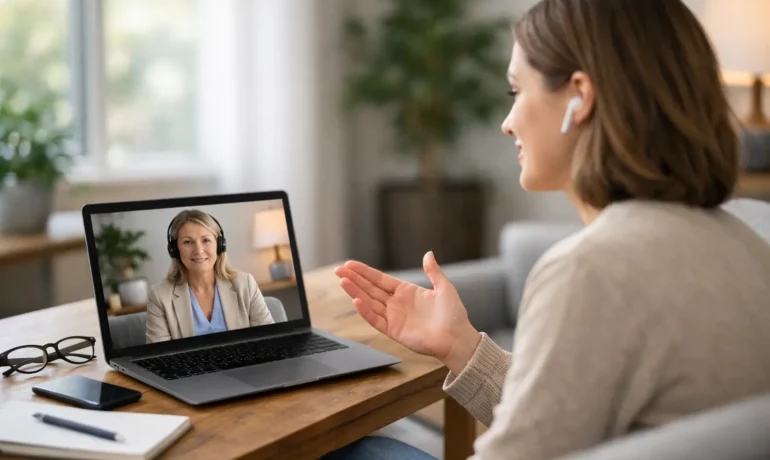
Telehealth sessions are also more straightforward than many people expect. You usually need a private space, a stable internet connection, and a device with audio and video. Beyond that, the heart of the work is still the relationship with your clinician – being heard, building trust, and creating a plan that feels both realistic and meaningful.
The real benefits of telehealth therapy New Jersey patients notice
The obvious benefit is convenience, but that is only part of the story. Many patients find that being in a familiar environment makes it easier to open up. They may feel more grounded at home than they would in a waiting room. For adolescents, it can reduce the stress of missing school or arranging transportation. For adults, it can make ongoing care more sustainable.
Telehealth can also support continuity. If your week is packed or your energy is low, attending from home may help you keep the appointment instead of canceling. Over time, that consistency can make a real difference in progress.
Another benefit is access to a broader care model. A practice that offers therapy, family work, couples support, behavioral treatment, and medication management can often meet patients where they are as needs change. Someone may start with individual therapy and later need medication support. Another person may begin with psychiatric treatment and then add therapy to build coping skills and address deeper patterns. Mental health needs are not static, and care should not be either.
When telehealth may not be the best fit
Telehealth is a strong option, but it is not perfect for every situation. Some patients prefer in-person sessions because they feel more focused face-to-face. Others may not have enough privacy at home to speak freely. Unstable internet, constant interruptions, or living situations that make confidentiality difficult can all affect the quality of care.
There are also cases where a higher level of support is needed. If someone is in immediate danger, experiencing a severe psychiatric crisis, or needs emergency intervention, telehealth outpatient treatment may not be the right setting. Good providers are honest about that. Safe care means recognizing when outpatient telehealth is appropriate and when another level of treatment is necessary.
This is not a drawback so much as a reminder that mental health care works best when it is matched carefully to the situation. The goal is not to force every patient into one format. The goal is to help each person find the kind of care that gives them the best chance to improve.
How to choose a telehealth provider in New Jersey
If you are looking for telehealth therapy New Jersey services, start by asking a few practical questions. Does the practice treat the issues you are dealing with? Do they work with adolescents, adults, couples, or families if that is relevant to your needs? Can they provide medication management if symptoms point in that direction? Do they accept insurance or offer an outpatient model that feels financially realistic?
Just as important, pay attention to how the practice talks about care. You want a provider that combines warmth with clinical clarity. Therapy should feel supportive, but it should also be structured enough to move somewhere. You deserve a clinician who listens carefully, explains options clearly, and adjusts treatment as your needs change.
For many people, it is helpful to choose a practice that can offer more than one service under the same roof. That can reduce the fragmented experience of juggling separate providers for therapy, medication, and behavioral support. In a well-coordinated outpatient setting, care tends to feel more connected and easier to maintain.
Mind Your Mind NJ is one example of that model, offering telehealth across New Jersey along with therapy and psychiatric support designed around the individual, not around a preset script.
Making online therapy work better for you
A few simple habits can improve the experience. Try to take sessions in a private, quiet place where you will not be interrupted. Log in a few minutes early. Use headphones if that helps with privacy. Keep a short note on your phone or in a notebook during the week so you remember what you want to bring up.
It also helps to be honest if telehealth is not feeling effective. Sometimes the issue is technical. Sometimes it is timing. Sometimes the treatment approach needs adjustment. A good clinician will not treat that as resistance. They will treat it as useful information and help problem-solve with you.
Therapy works best when it becomes part of a real life routine, not an ideal routine that never happens. If telehealth helps you stay engaged in care, that matters.
Reaching out for help does not have to mean rearranging your whole life before you begin. Sometimes it starts with one private conversation from a familiar place, one thoughtful assessment, and one plan that finally feels built for you.