
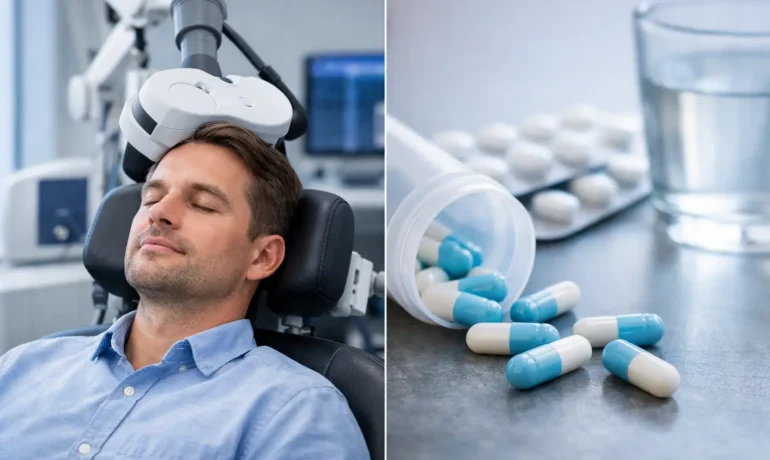
When depression makes it hard to get through the day, treatment decisions can feel heavier than they should. For many people comparing tms versus antidepressants depression care, the real question is not which option is universally better. It is which option makes sense for your symptoms, medical history, treatment response, and daily life.
That distinction matters. Depression is not one-size-fits-all, and treatment should not be either. Some people improve with medication and therapy. Others have tried several antidepressants with little relief, or they stop because side effects become too disruptive. TMS offers another evidence-based path, but it is not the right fit for every person either.
TMS versus antidepressants depression treatment: what is the difference?
Antidepressants are prescription medications used to reduce symptoms of depression by affecting brain chemicals involved in mood regulation, such as serotonin, norepinephrine, and dopamine. They are often a first-line treatment because they are widely available, familiar to many providers, and can be started relatively quickly.
TMS, or transcranial magnetic stimulation, is a non-invasive treatment that uses targeted magnetic pulses to stimulate areas of the brain associated with mood. It is typically considered when depression has not improved enough with medication, when side effects are hard to tolerate, or when a patient prefers a non-medication option as part of a broader treatment plan.
The biggest difference is straightforward. Antidepressants affect the body systemically, meaning the medication circulates throughout the body. TMS works locally on specific brain regions without requiring a daily medication. That difference shapes everything from side effects to convenience to how patients experience treatment.
How antidepressants help with depression
For many people, antidepressants are an effective part of care. They can reduce sadness, low motivation, sleep disruption, appetite changes, hopelessness, and difficulty concentrating. In some cases, they make it possible for a person to fully engage in therapy, return to work, reconnect with family, or simply feel more like themselves again.
There are several medication classes, and finding the right one may take time. A medication that works well for one person may not work for another. Even when a medication helps, dosage adjustments or switches are sometimes needed. This process can be frustrating, especially for someone already exhausted by depression.
Side effects are one of the main reasons patients ask about alternatives. Depending on the medication, side effects may include nausea, weight changes, fatigue, sleep problems, sexual side effects, emotional blunting, headaches, or increased anxiety early in treatment. Some side effects fade, while others persist long enough to affect quality of life.
That does not mean antidepressants are a poor choice. It means they require thoughtful monitoring and realistic expectations. Medication can be life-changing, but it is not always simple.
How TMS works for depression
TMS is performed in an outpatient setting and does not require sedation or anesthesia. During treatment, a magnetic coil is placed against the scalp to deliver pulses to targeted brain areas involved in depression. Patients remain awake and can return to normal activities afterward.
A typical course involves multiple sessions over several weeks. That schedule is more time-intensive than taking a pill, which is one reason TMS is not automatically the first step for everyone. Still, many patients find the routine manageable, especially if they have struggled with medication side effects or have not had enough relief from antidepressants.
Common side effects of TMS are usually mild and may include scalp discomfort, headache, or facial muscle twitching during treatment. Serious risks are uncommon when patients are properly screened. One key benefit is that TMS does not usually cause the systemic side effects often associated with antidepressants, such as weight gain or sexual dysfunction.
For some patients, that difference is significant. If someone has stopped multiple medications because of side effects, a non-drug treatment may feel more sustainable.
Is TMS more effective than antidepressants?
This is where nuance matters. TMS is not simply better than antidepressants, and antidepressants are not automatically the more practical choice. Effectiveness depends on the person.
For someone with newly diagnosed depression, an antidepressant may be the most appropriate starting point, especially when combined with therapy and close follow-up. It is accessible, familiar, and often covered within standard outpatient psychiatric care.
For someone with treatment-resistant depression, meaning symptoms have not improved enough after trying appropriate medication treatment, TMS may offer a stronger next step. In these cases, the comparison shifts. The question is no longer medication versus no medication. It is what to do when standard treatment has not been enough.
Some patients benefit from TMS alone. Others do best with TMS plus medication, or with therapy included throughout. The strongest plan is often the one built around what has and has not worked before.
TMS versus antidepressants depression care: side effects and daily life
Treatment is not just about symptom scores. It is also about whether a plan fits into real life.
Antidepressants are convenient in the sense that they can be taken at home, but convenience can come with trade-offs. Patients may need weeks before noticing improvement, and side effects can show up before benefits do. If a medication is not helping, tapering and switching may extend the process further.
TMS requires a schedule. You need to attend regular sessions, which may be difficult for patients balancing work, school, caregiving, or transportation needs. But for many people, the side effect profile feels easier to live with. They do not have to remember a daily medication, and they often appreciate avoiding body-wide medication effects.
This is one reason a personalized assessment matters. A treatment that looks ideal on paper may not work in practice if it does not match a patient’s health history, preferences, and responsibilities.
Who may be a good candidate for antidepressants
Antidepressants may be a strong option for patients who are starting treatment for depression, have responded well to medication in the past, need support for co-occurring anxiety, or want a treatment that can begin quickly without frequent office visits. They may also be appropriate when psychiatric medication management can be paired with therapy and regular follow-up.
That said, medication should not be prescribed on autopilot. A person’s age, symptom pattern, prior treatment response, medical conditions, and risk factors all matter. Adolescents and adults need careful monitoring, especially at the start of treatment or during dose changes.
Who may be a good candidate for TMS
TMS may be worth considering for adults with major depression who have not improved enough with antidepressants, who cannot tolerate medication side effects, or who want to explore a non-invasive treatment option within outpatient care. It may also be helpful for patients who feel stuck after trying several medications without meaningful relief.
A proper screening process is essential. Not everyone is eligible, and TMS is usually considered within a broader mental health plan rather than as a standalone fix for every kind of depression-related struggle.
Why therapy still matters in either approach
Whether someone chooses medication, TMS, or both, therapy often remains a central part of recovery. Depression affects thought patterns, relationships, motivation, and daily functioning. Biological treatment can reduce symptoms, but therapy helps patients understand triggers, build coping strategies, improve communication, and regain stability over time.
This is often where integrated outpatient care makes a difference. When therapy, medication management, and TMS are considered together rather than separately, treatment tends to feel more coordinated and less fragmented. Patients do better when their care team is paying attention to the full picture.
How to decide between TMS and antidepressants
If you are weighing these options, start with a full evaluation instead of assuming you have to choose alone. The right question is not, “What works for most people?” It is, “What is most appropriate for me right now?”
A thoughtful provider will look at how severe your depression is, whether you have tried medication before, what side effects you experienced, whether therapy is part of your care, and how treatment fits into your schedule and goals. For some patients, medication is the clearest first step. For others, especially those with a history of limited response or poor tolerability, TMS may be an appropriate next option.
At Mind Your Mind NJ, this kind of decision is best made through individualized, evidence-based care rather than a standard script. Depression treatment works best when patients feel heard, informed, and supported at each stage.
If you are feeling discouraged because one approach has not worked, that does not mean you are out of options. Sometimes the next right step is not trying harder with the same treatment. It is getting a closer look at what your depression actually needs.